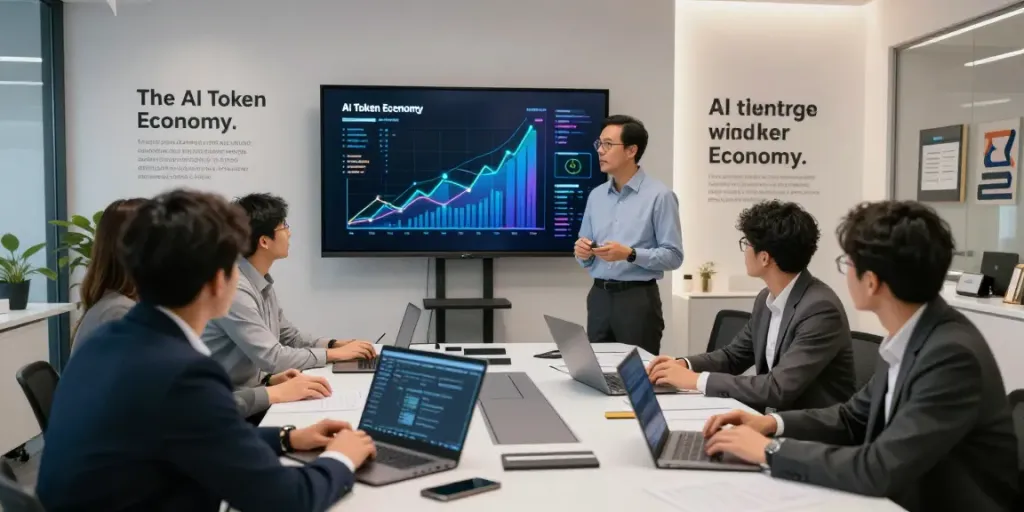
Understanding the AI Token Economy
The AI Token Economy represents the intersection of artificial intelligence (AI) and blockchain technology, offering a new and effective way to measure, incentivize, and optimize the operational capabilities of AI systems. In this burgeoning ecosystem, tokens serve as the essential currency that facilitates transactions within AI platforms, enabling a variety of applications from processing requests to rewarding contributions. As we delve deeper into this innovative structure, it becomes evident that understanding its mechanics is crucial for individuals and enterprises interested in leveraging AI technologies effectively. When exploring options, AI Token Economy provides comprehensive insights into how power and AI operations converge to create value.
What is the AI Token Economy?
The AI Token Economy can be described as a system where tokens represent the computational resources and services provided by AI platforms. Unlike traditional cryptocurrencies, AI tokens are specifically designed to measure the utilization of AI models, where each operation performed by these models incurs a cost measured in tokens. This economic model is built upon the concept of consumption and production of tokens that link directly to the processing power utilized for AI tasks.
In essence, when an AI performs a computation—be it natural language processing, image recognition, or any other task—it consumes input tokens and generates output tokens. The cost of these operations is akin to electricity usage, making the token economy an efficient representation of the operational footprint of AI systems. As industries increasingly adopt AI technologies, the demand for understanding and participating in the AI Token Economy will continue to grow.
Key Components of the AI Token Economy
- Tokens: These are units of measurement that reflect the usage of AI resources. Each token corresponds to a specific computational task, enabling precise billing and tracking of services.
- Infrastructure: Reliable power and computational resources are essential, as AI workloads require substantial electricity for processing. This infrastructure typically involves data centers equipped with high-performance GPUs.
- Participants: Individuals and enterprises can engage in the AI Token Economy through various plans that allow them to contribute power and capability to AI operations, thus earning rewards based on their participation.
- Market Dynamics: Similar to traditional economies, the AI Token Economy is influenced by supply and demand. The value of tokens can fluctuate based on their utilization, the efficiency of AI models, and market needs.
The Role of Tokens in AI Workloads
Tokens act as a bridge between users and AI services by quantifying the computational effort involved in executing tasks. Each transaction within an AI system is metered in tokens, creating a transparent and efficient billing structure. For instance, a natural language processing request may consume a certain number of input tokens based on the complexity of the query and the resources required for processing.
Ultimately, the integration of tokens into AI workloads allows for innovative business models that reward efficiency and optimization. As AI continues to evolve, the mechanisms surrounding token utilization will significantly influence how businesses operate and interact with AI technologies.
How AI Infrastructure Supports Token Operations
Importance of Reliable Power for AI
At the core of the AI Token Economy is the necessity for reliable power. AI models, especially those utilizing deep learning techniques, require substantial computational power and, consequently, substantial energy resources. The operational efficiency of AI factories hinges on their ability to maintain continuous and stable power supplies, which directly impacts their ability to deliver token-metered AI services.
In this context, organizations like 51 AIpower have developed comprehensive power plans that align electricity consumption with AI processing needs. By facilitating access to power, organizations can ensure that the infrastructure supporting AI models is robust and capable of handling high workloads, thereby enhancing the overall effectiveness of the AI Token Economy.
Power Plans Explained: What to Know
Power plans are structured offerings that allow users to participate in the AI infrastructure by contributing to electricity consumption based on their individual requirements. Each plan comes with different tiers of support, reflecting the varying needs of different users or enterprises. For example:
- Core Power Access: Ideal for entry-level participants looking to support basic AI workloads.
- Enhanced Power Access: Suited for users who require moderate support for more demanding AI tasks.
- Advanced Power Access: Designed for enterprises with substantial processing needs requiring guaranteed power availability and efficiency.
Connecting Power with AI Factory Operations
The ability to connect power resources with AI factory operations is fundamental to the AI Token Economy. This connection ensures that the electricity consumed aligns with the computational demands of AI tasks. By implementing intelligent power management solutions, organizations can optimize electricity usage, thus reducing costs and increasing the sustainability of AI operations.
Moreover, effective coordination between power allocation and AI factory outputs allows participants to comprehend their contributions and rewards accurately. As the industry progresses, this synergy will become increasingly critical in driving operational efficiency within the AI Token Economy.
Participant Rewards in the AI Token Economy
Calculating Your Contribution Rewards
Every participant in the AI Token Economy has the potential to earn rewards based on their contributions toward power and computational resources. The calculation of these rewards is rooted in how much power a participant supports and the volume of tokens generated from associated AI workloads.
For instance, if a power plan supports a specific AI factory and contributes to the completion of several tasks, the participant receives a portion of the revenue generated from those operations, after deducting electricity and operational costs. This system creates a clear incentive for users to engage actively with AI infrastructure.
Understanding Power Contribution Metrics
To accurately measure contribution rewards, participants need to understand the underlying metrics used to evaluate power allocation. The primary metrics include:
- Electricity Supported: This metric captures the total power consumption attributed to a participant's plan.
- Billable Tokens Processed: Measures the input and output tokens related to the AI workloads supported by the participant.
- Operating Costs: Includes deductions for electricity and other expenses related to running AI workloads.
By mastering these metrics, participants can optimize their plans to maximize rewards efficiently and effectively.
Choosing the Right Power Plan for Maximum Rewards
Selecting the appropriate power plan is crucial for participants in the AI Token Economy aiming to maximize their rewards. Each plan offers different levels of support and pricing structures, so it’s essential to evaluate the operational requirements carefully. Factors to consider when choosing a plan include:
- The scale of AI workloads you expect to run.
- The duration over which you want to participate.
- Your budget for electricity and operational costs.
By aligning these parameters with the power plans available, participants can strategically position themselves within the AI Token Economy to derive meaningful rewards.
Challenges and Considerations in the AI Token Economy
Common Misconceptions About AI Tokens
As the AI Token Economy grows, misconceptions about what AI tokens represent can lead to confusion. It is critical to clarify that AI tokens are not cryptocurrencies; rather, they are units of measurement for computational tasks within AI systems. Understanding this distinction can help participants make informed decisions regarding their engagement with AI platforms.
Addressing Operational Risks and Fluctuations
While the AI Token Economy presents exciting opportunities, it is not without risk. Factors such as fluctuations in power demand, electricity prices, and unexpected operational challenges can impact the economic viability of participating in this ecosystem. Participants should consider these risks when engaging with AI infrastructure, developing contingency plans to mitigate the potential consequences of market instability.
Future Trends in AI Infrastructure and Token Usage
As technology continues to evolve, several trends are emerging within the AI Token Economy. Innovations in AI models, improvements in energy management, and increased automation in data centers are expected to reshape token usage and participant engagement strategies. Moreover, as regulatory frameworks develop around AI technologies, they will likely influence how tokens are utilized and valued in different markets.
Getting Involved in the AI Token Economy
Steps to Activate Your Power Plan
To participate effectively in the AI Token Economy, individuals and enterprises must navigate the process of activating a power plan. This typically involves:
- Assessing your specific needs and requirements for AI operations.
- Selecting an appropriate power plan that aligns with your goals.
- Completing the necessary verification and registration processes on the platform.
- Activating your plan and monitoring its performance over time.
Connecting with the 51 AIpower Network
Joining the 51 AIpower network provides participants with access to a dynamic ecosystem that connects power resources with AI operations. Through this network, users can share insights, contribute to projects, and optimize their engagement with the AI Token Economy.
Participating as an Individual or Enterprise
The structure of the AI Token Economy accommodates both individual users and larger enterprises. Individuals can engage with minimal resources, taking advantage of power plans tailored for small-scale participation. Conversely, enterprises can leverage high-capacity power plans to support extensive AI operations, benefiting from economies of scale and strategic resource management.
What powers the AI Token Economy?
The backbone of the AI Token Economy is reliable and efficient electricity, matched with the computational capacity needed to run sophisticated AI models. The integration of power management solutions ensures that AI processors operate at optimal levels, accommodating the demands of AI workloads.
How are contribution rewards calculated?
Contribution rewards are determined by evaluating the total electricity supported by a participant’s plan, alongside the token activity associated with AI workloads. This calculation provides transparency and clarity in how rewards relate to power contributions.
Who can participate?
Participation in the AI Token Economy is open to anyone interested in contributing to AI infrastructure, from individual users to large enterprises. The key requirement is the commitment to support the demand for power and utilize AI resources effectively.